

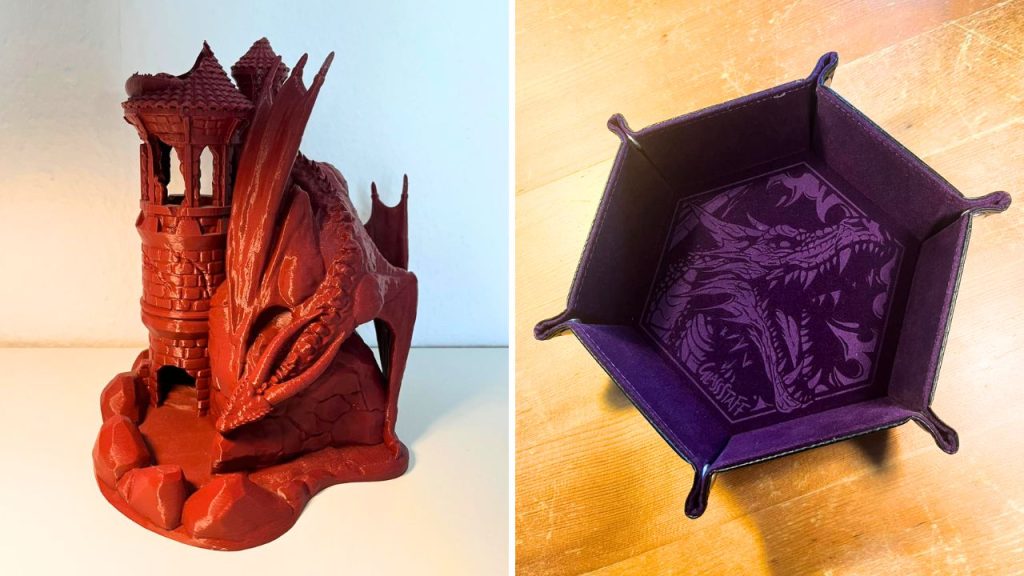
Dice Tower/Dice Mat
The two gadgets are there to make rolling dice in Dungeons & Dragons easier for you or at least more exciting if you have a flair for drama and presentation. You can drop a die or multiple ones into an opening at the top, which gets shaken nicely on the way down before revealing the result at the bottom.
The dice tower is a perfect example as it comes in various styles and materials. There are quite simple, rectangular towers, ornate towers in the shape of a castle tower, trees, or monsters, and much more. They are sometimes made of wood, through 3D printing, or crafted by very skillful fans from clay.
I also own a dice tower, which I bought mainly for its look and the possibility to paint it. However, it is not often used and has rather become a decorative object.
Rather, I use a dice mat for every roll. There are different dice mats made of leather, fabric, or other materials. Even though it is not “necessary”, I actually use it every session for every roll. Especially in a household with pets like cats, the dice mat prevents you from throwing your dice across the room during your turn and ensures that you keep all dice together when rolling multiple dice at once.
Conclusion: Dice towers and mats are not urgent items, but I recommend both! I find the dice mat incredibly practical and dice towers are just fun. Additionally, they can add extra drama for very crucial rolls.
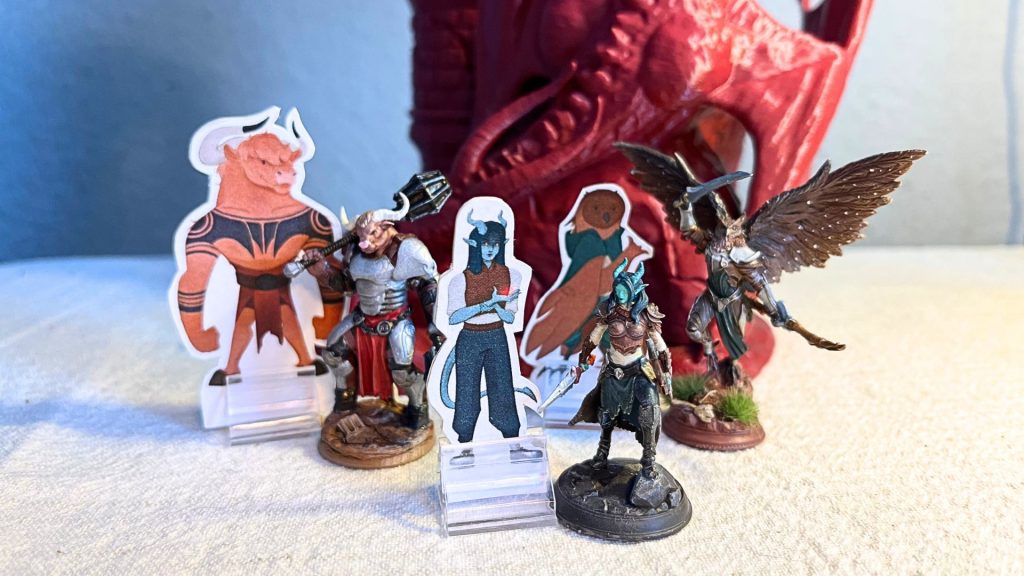
Figures/Miniatures
Figures are not only useful but actually quite urgent indicators of where your adventurers are located on a map. They work in tandem with the grid to determine distances, cover, low and high ground so that you can know exactly whether your moves will succeed in combat.
There are various ways to use indicators for your characters, with many players gladly using figures that represent their heroes. This can be solved either with cardboard figures with stands or with tabletop miniatures, which can develop into a whole hobby in itself, as in my case.
For this reason, I want to emphasize: Miniatures, especially the painted ones, are not a must. But for many players and even people not playing, painting miniatures has become a very popular activity that can take place between sessions. If you are curious and want to know more about getting started with miniatures, you can learn more here: My new hobby is even nerdier than Dungeons & Dragons, and you can wonderfully combine both.
Conclusion: Figures are important to use the grid correctly. You do not have to buy figures and can also use classic game pieces from board games, Monopoly objects, or small everyday items. However, I personally recommend giving the miniature hobby a chance with the urgent warning that it could become your new favorite activity.

Your opinion is important to us!
Do you like the article? Then let us know!