
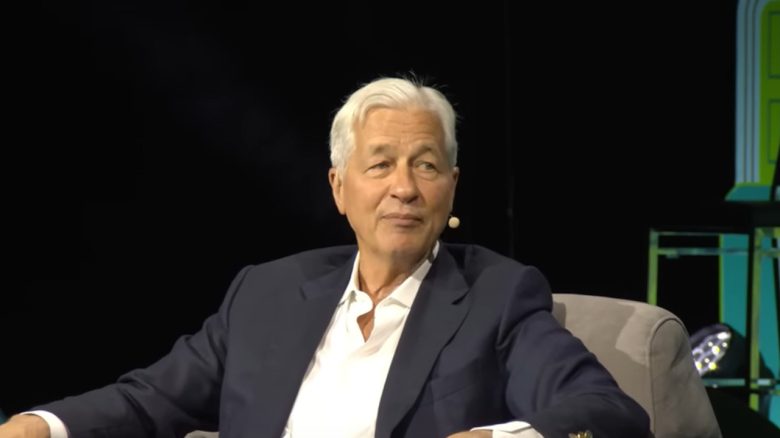
James Jamie
Dimon has navigated his bank through all major financial crises in recent years with a single rule. Dimon attributes this to caution, not luck. For he does not let himself be driven by euphoria when the market looks good.
Jamie Dimon bought his first stock at just 14 years old, supported by his father, a stockbroker. Shortly after, the market crashed by 45%. This experience shapes his decisions to this day. He derives his most important motto or rule from it. Today, Dimon is the CEO and Chairman of JPMorgan Chase & Co
.
With his rule and motto, he has made JPMorgan Chase a bank that has easily survived all major financial crises in recent years, while many competitors have failed.
Another CEO, on the other hand, ruined his company in less than a minute:
Dimon’s central motto is: “Don’t blow up”
What is this rule? Dimon’s central motto is: “Don’t blow up”, meaning: one should avoid being destroyed at all costs. For him, this means being particularly cautious and not underestimating risks, even when others become euphoric. He warns against getting swept up in the mood of the crowd, as markets can unexpectedly collapse time and again (via fortune.com).
He once explained that banks are particularly vulnerable to sudden shocks. These could then lead to a rapid collapse of the respective bank. And such a failure (“explosion” or “blow up”) cannot be undone and leads to lasting damage and a significant loss of trust.
The principle “Don’t blow up” is in focus because, for Dimon, the survival and resilience of the bank against crises are more important than short-term profits. He wants to prevent the bank from being wiped out by extreme events or management errors.
This defensive strategy has made JPMorgan Chase the only major US bank that has comparatively emerged unscathed from every crisis since 2008. Dimon explains his success in a critical examination of the financial crisis through preparation and rejection of spontaneous investments (via businessinsider.com).



Luis von Ahn, co-founder and CEO of Duolingo, recently stated in an email sent to all employees that his company should become an “AI-first” company. However, the reactions from employees and users were so devastating that he had to retract his statements and apologize: A CEO must realize that users do not want to support a company that replaces humans with AI